
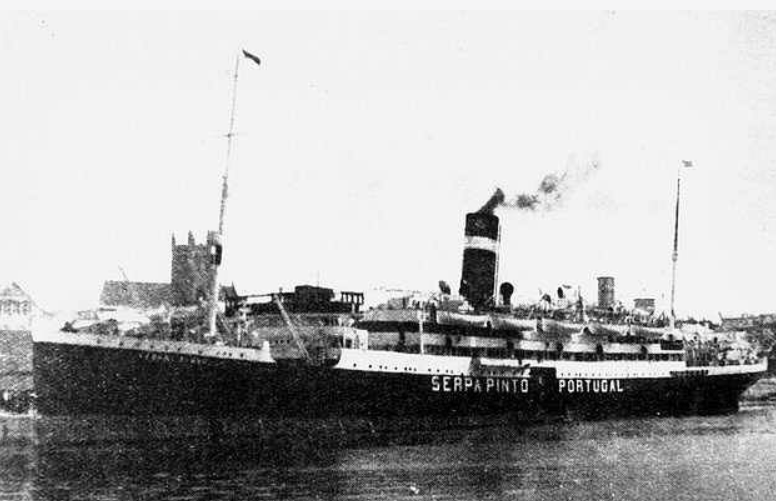
Friday night we watched the PBS show, U.S. and the Holocaust: Insight and Understanding. Having seen the original three-part series when it first aired, I found it enormously educational and emotional, especially with the inclusion of a clip of the Serpa Pinto, the converted freighter my paternal great-grandparents sailed on to the U.S. in 1941.
The focus of the program was to “offer a deeper understanding of the three-part PBS documentary that explores America’s response to one of the greatest atrocities of the 20th century.” As I listened to the filmmakers speak about how they decided who to interview and what to include, I reflected on my experience writing Nothing Really Bad Will Happen.
Initially, I didn’t set out to write a novel when I first began writing the story of my great-grandfather, Sigmund Lichtenthal. My intent was to relate the family history—how he built his hat business, how he lost it to the Nazis and how, despite many obstacles, the family persevered, culminating with my success in obtaining reparations for their losses.
As the narrative unfolded, I witnessed the fragmentation of the United States population. I wasn’t sure whether I was writing about 1938 Germany/Austria or 2020 America. Both time periods saw the emergence of terms like “fake news” and the promotion of anger towards specific groups. It was then that I realized my family’s story needed to be shared with the world.
The reactions to my book have been overwhelming. At my recent author talk, one audience member broke into tears as he explained his inability to read the chapters about the incarceration in Dachau, of my grandfather, Paul Lichtenthal. Last week, I spoke at the Woodbury Library about sharing family stories, during which I related the premise of my book. After the conclusion, a gentleman approached me, quite eager to talk. He said he was so grateful for people like me who continue to tell stories about the Holocaust, despite all the pushback from certain groups. As he spoke, he became more emotional, taking my hand and wishing me success in my endeavors.
These interactions reinforce my belief in the importance of preserving and sharing these stories. In my own small way, I am part of the resistance. I am speaking up. It happened. We need to remember. We need to tell the stories lest we forget.
How do you preserve and share your family’s history? Have you encountered similar reactions when sharing your stories?”
 nothingreallybadwillhappen.com
Your super-power is being able to write convincingly about the motivations and emotions of your ancestors, so their decisions and actions are more understandable to generations of descendants!
LikeLike