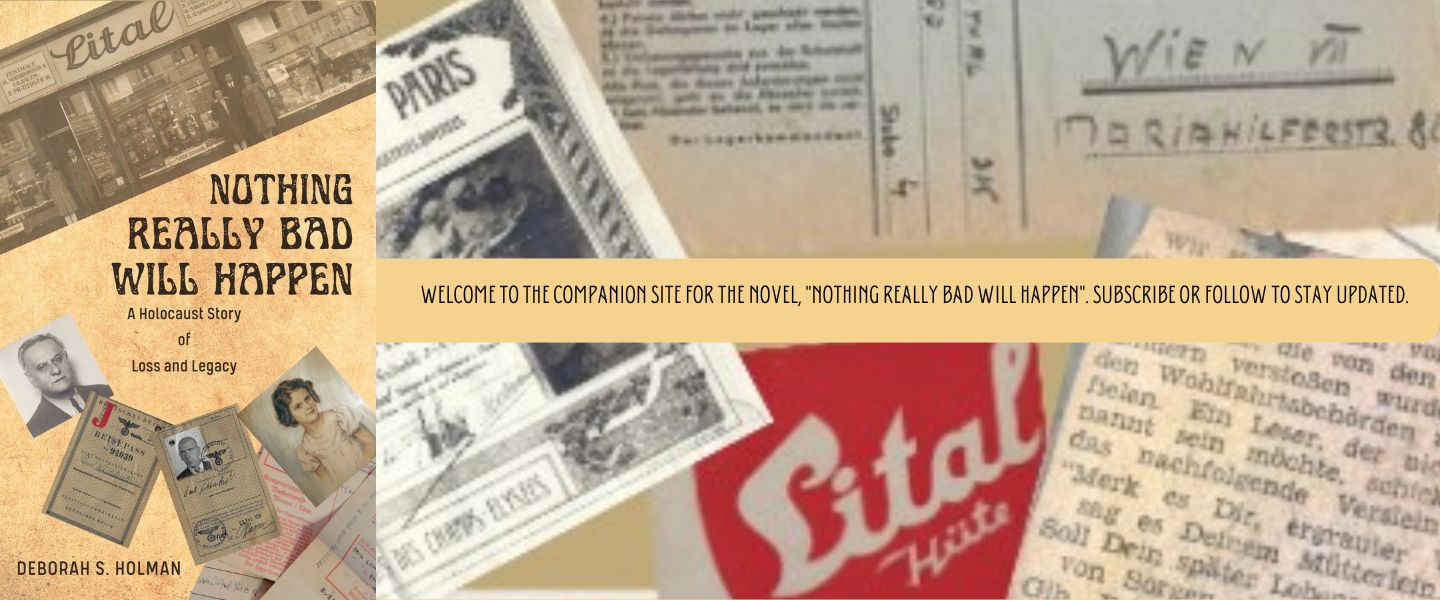

International Holocaust Remembrance Day is observed each year on January 27, the anniversary of the liberation of Auschwitz-Birkenau, the largest Nazi concentration and extermination camp. This day honors the memory of the six million Jews and millions of others who were victims of the Holocaust. It serves as a reminder of the dangers of hatred, prejudice, and genocide, and emphasizes the importance of fostering tolerance and human rights worldwide.
This year, I have the honor of sharing family artifacts connected to the writing of my novel, Nothing Really Bad Will Happen, in a special display at the Woodbury Public Library which will run through the entire month of January. The exhibit tells the story of resilience and loss in my family’s history through items from my great-grandfather’s hat business, personal documents, and memorabilia. It highlights the profound impact of the Holocaust and the enduring legacy of those who survived. By preserving and sharing these artifacts, we honor the past and inspire future generations to remember and learn from history.
Here are a few photos for those of you unable to visit the display.

I divided the cabinet into four shelves representing the various phases of the family’s lives. You can click on each image below to enlarge it for easier viewing. (Thank you, Scott for lending me your height!)

Legacy (1891-1938) – Building a Dream: This shelf showcases the early achievements of my great-grandfather Sigmund Lichtenthal, who founded LITA, a prestigious hat company in Vienna. From patents (triangle hatbox) to awards (Grand Prize for hat design at the 1900 Paris Exposition), these items reflect the family’s creativity, craftsmanship, and success during this period of growth and innovation. On the far right is Sigmund’s Arbeitsbuch, which details his training as a master hat-maker. You can read more about some of the items here. The framed cross-stitch snow scene hung over Doris’s bed in Vienna until 1938.

Loss (1938-1941) – Shattered Lives: The Holocaust marked a devastating chapter for the family. This shelf includes evidence of the Nazi takeover of Lital (14-day journal of Friedrich Keun-Vechet, the Nazi assigned to liquidate LITAL), passports marked with “J,” and letters sent by my grandfather, Paul, from the Dachau and Buchenwald concentration camps, symbolizing the profound losses endured during these years of persecution. Many of these items are also shown in more detail on the chapter pages of this website. Also shown is a page of testimony for Renee Mendl, Rosa Lichtenthal’s sister. Renee was deported from Vienna to Minsk in 1941, where she perished. The testimony was submitted to Yad Vashem in 1973 by Renee’s son, Kurt Mendl, who later changed his name to Robert Cunningham. The hard-to-see coin is the 1938 New Year’s token. You can read about its significance here.
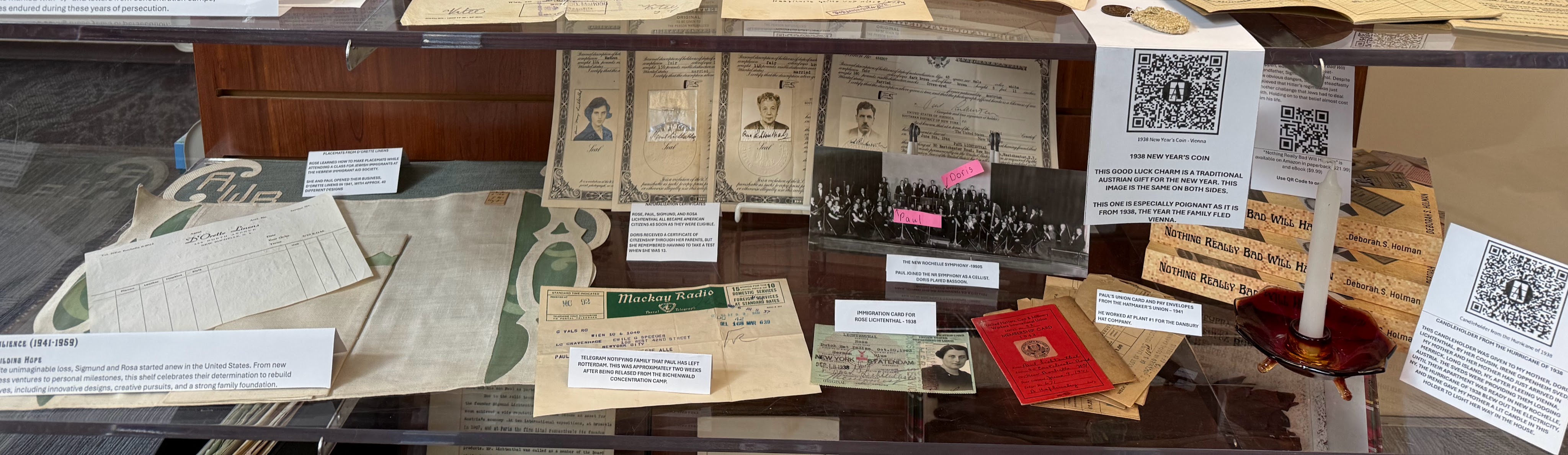
Resilience (1941-1959) – Rebuilding Hope: Despite unimaginable loss, the family started anew in the United States. From new business ventures (D’Orette Linens, operated by Rose and Paul Lichtenthal from 1941-1954) to personal milestones, this shelf celebrates their determination to rebuild their lives, including innovative designs, creative pursuits (Doris and Paul were members of the New Rochelle Symphony), and a strong family foundation. Many of these items are explained in more detail here. The significance of the candleholder can be found here.

Reparations (1957-1969, 2003-2010) – Seeking Justice: This shelf represents the family’s fight for justice and recognition. Through reparations from Austria, the story comes full circle, acknowledging the resilience and determination to honor past losses while building a legacy of remembrance. Some of these items can be viewed in more detail here. Doris’s 1938 schoolbag doesn’t really fit with this topic, but it was the best place in the cabinet to put it! You can read more about Doris and her adjustment to school in America here. The binder is one of three containing many of the documents provided by the Austrian Archives as well as family documents used by Sigmund and Paul to bolster their reparation claims from 1938-1959. You can read more about some of these documents here.
By sharing these artifacts and the stories they hold, this display serves as both a memorial and a call to action. It reminds us of the devastating consequences of hatred and intolerance while celebrating the resilience and courage of those who endured unimaginable loss.
As we observe International Holocaust Remembrance Day, let us reflect on the importance of preserving history, not just as a record of the past but as a lesson for the future. May these items inspire conversations, deepen understanding, and strengthen our commitment to building a world free of prejudice and injustice.
Through remembrance, we honor the lives forever changed by the Holocaust and ensure that their stories will never be forgotten.
 nothingreallybadwillhappen.com
This is so interesting! Thank you for posting.
LikeLiked by 1 person